
Ever walked away from your business at night wondering if everything will be okay until morning? That nagging feeling keeps many business owners awake. We know because we’ve helped hundreds of them sleep better. What’s the answer? Security camera monitoring. OK, so how does security camera monitoring work? Read on to learn more.
Understanding remote camera monitoring
For those new to topic, security camera monitoring. also referred to as CCTV monitoring might sound like just another business expense. But, conversely let me share what our clients discover: it’s actually your silent guardian, working tirelessly when you can’t be there.
It’s a new type of security. But funnily enough, it’s been around for decades. It’s gaining traction
So, how does security camera monitoring work?
Think of security camera monitoring as having a watchful team, dedicated to your premises around the clock.
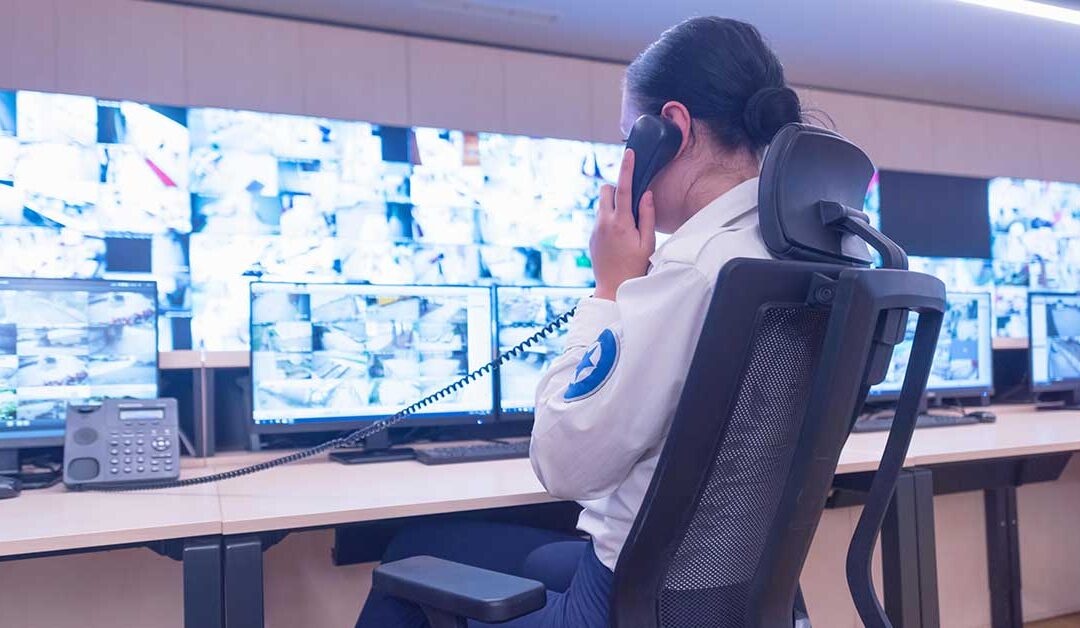
This isn’t just cameras recording footage that nobody watches until after something bad happens. Instead, it’s either sensor activated or live surveillance where trained professionals keep an eye on your premises in real-time.
When I show clients our monitoring centre for the first time, they’re often surprised. “You mean someone’s actually watching my cameras all the time?” The answer is yes, and that makes all the difference.
Related reading: A guide to remote CCTV monitoring
What is the camera monitoring process?
Let’s walk through what happens during a typical security situation:
1. Something triggers the system
Motion sensors detect activity in an area that should be empty after business hours.
2. Alert reaches the monitoring centre
Our monitoring team receives an immediate notification with the camera location.
3. Live assessment begins
Security professionals pull up your camera feeds and assess what’s happening.
4. Verbal intervention
If necessary, our team can speak directly through on-site speakers: “This is security. The premises are under surveillance and authorities have been notified.”
5. Response coordination
Based on what they see, monitors will either contact your designated staff, dispatch security personnel, or call emergency services.
All this happens within minutes—often seconds. When was the last time you could respond that quickly to a security threat at 2 AM?
What are the different types of services?
Security camera monitoring comes in two main flavours:
Sensor-activated monitoring
Cameras are fitted with sensors, perimeters are covered with beams. When an intruder activates a beam or sensor, it triggers an alarm. That’s received by our team and then they look at your footage to determine what action is needed.
Live camera monitoring
This solution offers live CCTV monitoring by security professionals who can respond immediately when they spot something suspicious. These individuals become your virtual security guards. Fully trained and ready and equipped to respond to threats and take action the moment something seems off.
Which would you prefer: learning about a break-in the next morning, or having someone intervene while it’s happening?
The building blocks of an effective solution
Proper remotely monitored surveillance systems aren’t just thrown together with random equipment. Each piece serves a specific purpose:
- Cameras
- Video Management Systems (VMS)
- Alarm integration
- Monitoring staff
- Loudspeakers
- Ai video analytics
A client once asked me, “Can’t I just install cameras myself and check the app occasionally?” I asked him how often he’d be willing to look at his phone at 3 AM.
Security requires consistency—something automated systems paired with human oversight delivers best.
Real protection, real results
The beauty of active security monitoring lies in prevention rather than just documentation.
Imagine of the below scenario was you.
Surveillance camera monitoring was deployed at a small manufacturing business that had experienced three break-ins over six months.
The owner was sceptical but desperate.
Within the first week, our monitors spotted someone testing windows after hours, issued a verbal warning, and contacted police.
The would-be thief fled, and they haven’t had an incident since.
What would you rather have: video footage of someone stealing your equipment, or the attempted theft stopped before anything was taken?
What are the benefits of security camera monitoring?
Let’s take a look.
Crime prevention
Most criminals look for easy targets. When they realize someone is watching and ready to respond, they typically move on.
Rapid response times
Minutes matter during security incidents. Monitors who see events unfolding can provide authorities with real-time information, improving response effectiveness.
Resource optimisation
Many businesses find they can reduce or reallocate physical security personnel, saving money while improving coverage.
Staff safety
Employees working alone or during off-hours gain an extra layer of protection, knowing someone is keeping watch.
Peace of mind
Our clients consistently report this as the biggest benefit—knowing their business is protected even when they’re not there.
As you can see, the benefits of security camera monitoring solutions for businesses are vast. Detecting and deterring intrusion. And, lowering the cost of security. These are all valuable tools to improve site security.
Camera monitoring vs. on-site guards: What’s the difference?
“Why not just hire a security guard?” This question comes up frequently, and it’s worth exploring.
Guards
On-site guards can be valuable, but they come with limitations. A guard can only be in one place at a time. They need breaks. They might miss things when fatigue sets in during long night shifts.
Also they require significant financial outlay. In addition to their pay, other costs include:
- Paid holiday
- A Manager
- Cover for sickness
Monitoring
On the other hand, camera monitoring offers advantages that physical guards simply can’t match:
- Multiple locations simultaneously
Monitors can secure every corner of your site at once, from entry points to back offices.
- Consistent alertness
Fresh monitoring staff rotate shifts, maintaining high vigilance levels throughout the night.
- Cost effectiveness
Professional monitoring typically costs significantly less than employing full-time security guards.
- Recorded evidence
Every incident is automatically documented with video evidence, useful for investigations or insurance claims.
Is it cost-effective?
Have you calculated what a single successful break-in might cost your business?
Now compare that to the monthly cost of professional monitoring.
It’s really that simple.
But, also. How much do security guards get paid?
Compare that to the monthly cost of professional CCTV monitoring.
Thinking about a monitored security solution for your sites?
If you’re considering security camera monitoring, start by asking potential providers these questions:
- Who’s doing the actual monitoring?
- Are they trained security professionals or just minimum-wage staff watching screens?
- What’s their response protocol?
- How quickly do they assess situations, and what actions can they take?
- What technology do they use?
We’ve spent years refining our approaches based on real-world security situations. The right setup requires understanding both the technical aspects and human psychology behind security threats.
When a client asks about the “best” security solution, I always respond with questions about their specific concerns.
- Are you worried about external theft?
- Employee safety?
- Inventory control?
The answers shape the perfect system for you.
Security isn’t one-size-fits-all. Your monitoring solution should be as unique as your business.
Have you thought about what keeps you up at night regarding your business security?
That’s where we should start the conversation.
Would you like to sleep better knowing your business is protected 24/7?
That’s exactly what our clients tell us they’ve gained.
How does security camera monitoring work? Summary
Security camera monitoring is a vital component in modern security strategies, offering real-time surveillance and rapid response capabilities to protect assets and ensure safety.
It’s a simple but effective process.
- Motion detection triggers
- Alert received
- Live footage reviewed
- Audio challenge
- Emergency response or keyholder dispatch
Hopefully, now you will know exactly how security camera monitoring works, and its benefits to businesses across the UK.
FAQS
How does remote surveillance camera monitoring work?
Remote CCTV surveillance monitoring involves continuous observation of surveillance feeds by trained professionals who can respond immediately to any detected threats or irregularities.
Can these solutions deal with real threats faster than onsite guards?
Yes, remote monitoring allows for immediate detection and response, even often outpacing the reaction time of on-site personnel.
What happens when a sensor is activated and a real threat is spotted?
The monitoring centre reviews the footage, issues an audio warning if necessary, and contacts emergency services or keyholders to address the threat.
Is remote surveillance camera monitoring a 24/7 security service?
Yes, it provides round-the-clock surveillance, ensuring continuous protection regardless of time or day.
Who monitors the cameras at a security camera monitoring station?
Trained security professionals oversee the feeds, equipped to assess situations and coordinate appropriate responses swiftly.