
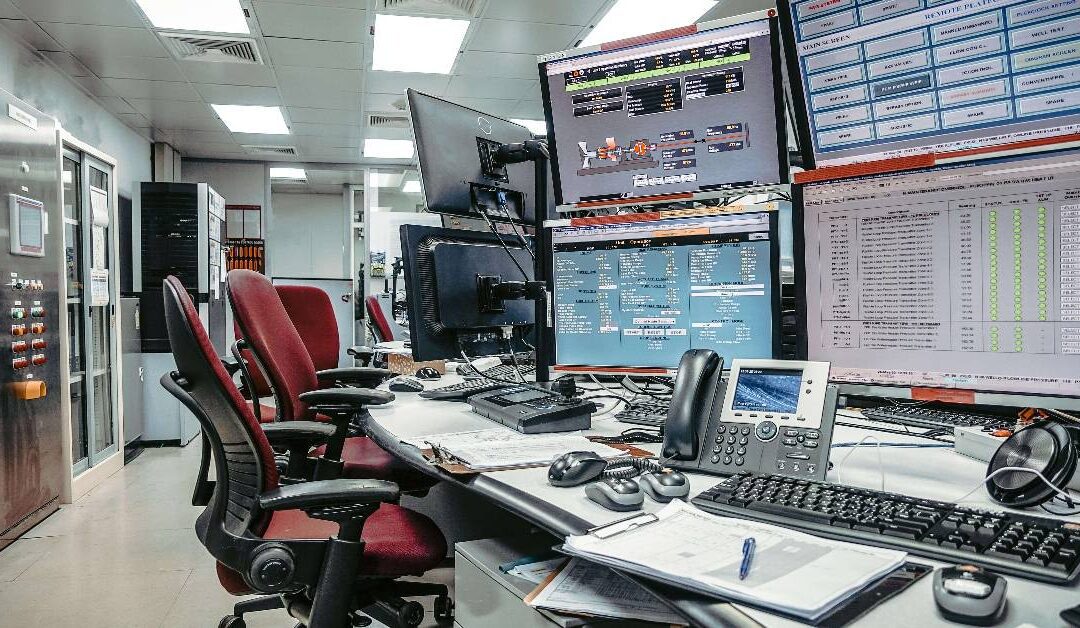
CCTV monitoring station operators don’t sit watching endless camera feeds. They respond the moment an alert is triggered, checking footage, speaking through on-site speakers, and contacting keyholders or police if needed.
Trained professionals at our CCTV monitoring station work around the clock to identify real threats quickly and stop trouble before it escalates.
CCTV operators work on alerts, not constant feeds
Unlike the movies, operators in a modern CCTV monitoring centre don’t spend hours watching rows of camera feeds. Instead, they work in a reactive and focused way.
They are responding to alerts triggered by:
- Motion sensors
- Virtual tripwires
- Infrared or thermal activity
- Line-crossing analytics
- Unusual object detection
This alert-based system means they can monitor dozens of sites efficiently and effectively. Modern monitoring centres rely on motion sensors, analytics, and AI detection to identify suspicious activity in seconds. You can read more about how CCTV monitoring works and the full process behind live detection, alert handling, and rapid response.
Daily tasks of a CCTV monitoring centre operator
Here’s a breakdown of what an operator might do in a typical shift:
- Review triggered camera feeds immediately if an alert is triggered
- Confirm whether the alert is genuine or a false alarm
- Use PTZ (pan-tilt-zoom) functions to investigate suspicious activity
- Issue live audio challenges via on-site speakers
- Escalate verified threats to keyholders or mobile patrols
- Log each incident for audit and evidence purposes
- Check scheduled camera feeds for maintenance or system testing
- Communicate with clients regarding site-specific protocols
- Monitor system health and ensure cameras are functioning
- Conduct visual checks of vulnerable areas during scheduled patrol rounds
- Respond to direct client requests for camera checks
What happens at a CCTV monitoring station?
A remote CCTV monitoring centre is the nerve centre of every monitored security system. It’s where trained operators watch over hundreds of camera feeds and respond to alerts from sites across the country.
Inside a modern control room, the setup looks more like a high-tech operations hub than a security office. Rows of large screens display live feeds, maps, and sensor activity.
Operators sit at workstations equipped with dual monitors, two-way audio systems, and direct communication links to emergency services.
Operators can switch cameras, zoom with PTZ controls, trigger alarms, or issue voice challenges at the click of a button.
Supervisors oversee shifts to ensure incident response meets agreed service levels. Every action is logged, timestamped, and stored securely for compliance and evidence.
Modern CCTV monitoring stations blend human expertise with technology, turning what could be a passive camera system into an active security force, working around the clock.
Common alert types CCTV operators respond to
Each alert is based on a trigger or system rule, and operators are trained to respond differently depending on the type:
- Perimeter breaches: Someone crosses a virtual boundary line set on the system.
- Loitering detection: A person or vehicle remains in one area too long.
- Unusual activity: Movement detected where there shouldn’t be any.
- ANPR camera alerts: Number plates flagged or unknown vehicles entering a secure area.
- Heat or light anomalies: Sudden thermal changes picked up on FLIR or thermal cameras.
- Line crossing: Activity detected when someone crosses an IR beam
Each of these alerts is part of the wider CCTV monitoring process that ensures no intrusion goes unnoticed, from detection and verification to verbal intervention and escalation.
Handling false alarms
False triggers happen: branches moving, wildlife, headlights, and even insects.
Professional CCTV monitoring operators are trained to:
- Quickly review the footage and identify the cause
- Filter out false alerts using their judgment and experience
- Avoid unnecessary escalation or police callouts
- Log and tag the incident to help refine alert settings
This reduces noise and keeps focus on real threats. After all, in security, efficiency is key. Wasted time and needless tasks could detract from your theft prevention aims.
Reducing false alerts enables monitoring station operators to focus on genuine threats, which is one of the key benefits of CCTV monitoring. All in all, this improves protection, reduces downtime, and improves overall site security.
Using live audio challenges
When a threat is confirmed, operators issue a pre-recorded or live voice message over on-site speakers:
“This is a security warning. You are being monitored and recorded. Leave the premises immediately.”
This is often enough to deter intruders before they commit a crime. If not, the operator moves to the next step.
Escalating real threats
If a genuine intrusion is confirmed, the CCTV monitoring station operator will:
- Follow the client’s escalation protocol
- Contact mobile patrols or site keyholders
- Request police attendance, often providing live footage
- Continue monitoring the suspect until authorities arrive
- Secure footage and timestamps for evidence
They act as the control centre, making fast decisions that protect the site and reduce damage. For many organisations, the return on investment is clear, and as a result, it’s clear that the cost of CCTV monitoring is worth paying, especially if you employ guards (see below), or need to secure your site 24/7.
In fact, many businesses find that CCTV monitoring is cheaper than hiring security guards, while still delivering faster response times and stronger coverage across large, high-risk sites.
Keeping security in the capable hands of a monitoring station operator
Behind every live camera feed, there’s a team of professionals making real-time decisions that protect businesses from loss and disruption.
CCTV monitoring station operators are the link between technology and human judgment, the people turning alerts into action.
Key takeaways:
- Operators work from remote monitoring centres 24/7
- Alerts are reviewed instantly, not hours later
- Live warnings deter intruders before damage occurs
- Verified threats are escalated quickly to mobile response teams or keyholders
- Every action is logged, time-stamped, and stored for evidence
CCTV monitoring station operators play a crucial role in safeguarding sites of every size, ensuring every alert, sensor, and camera works together to stop threats before they turn into costly incidents.